Submarine Cable: समुद्र में कैसे बिछता है Internet?
जब आप किसी अमेरिकी वेबसाइट को खोलते हैं और वो 2 सेकंड में load हो जाती है — तो वो data satellite से नहीं आया। वो हजारों किलोमीटर लंबी submarine cable से होकर गुजरा, समुद्र की तलहटी पर बिछी हुई। दुनिया का लगभग 95% internet traffic इन्हीं underwater cables से चलता है। Starlink और satellite internet चर्चा में जरूर हैं, लेकिन real-time video calls, banking transactions, और cloud data के लिए अभी भी submarine cables ही backbone हैं। अगर आप genuinely समझना चाहते हैं कि global internet कैसे काम करता है — तो इस एक चीज़ को समझना जरूरी है।
Submarine Cable असल में होती क्या है?
सीधे शब्दों में: यह एक fiber optic cable है जो दो देशों के बीच समुद्र के नीचे बिछाई जाती है।
लेकिन यहाँ जो बात आमतौर पर confuse करती है वो यह है कि लोग इसे एक मोटी industrial pipe की तरह imagine करते हैं। सच यह है कि इसका diameter एक garden hose जितना भी नहीं होता — करीब 17–20mm। उसके अंदर कुछ glass fiber strands होते हैं, जिनकी मोटाई human hair से भी कम होती है। इन्हीं पतले fiber strands से light pulses के रूप में data travel करता है — लाखों gigabits प्रति सेकंड।
Cable की layers — एक real-world breakdown
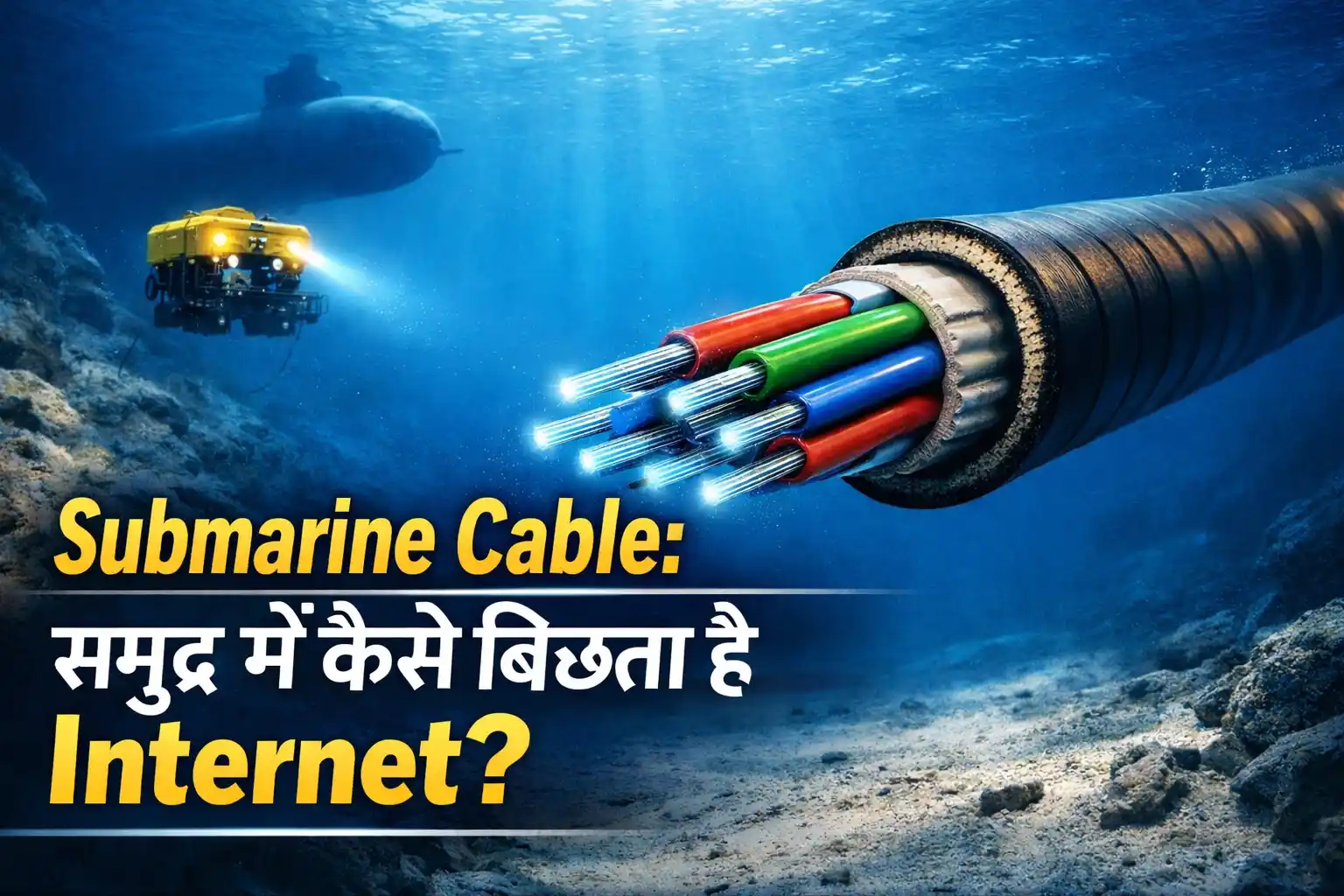
बाहर से देखने पर यह सिर्फ एक काला तार लगता है। लेकिन cross-section काटें तो दिखेगा:
सबसे अंदर: Glass fiber strands — असली data highway
उसके ऊपर: Optical gel — fiber को moisture से बचाता है
फिर: Copper conductor — repeaters को power देने के लिए
उसके बाद: Aluminum water barrier
सबसे बाहर: Steel wire armor — खासकर shallow water में, जहाँ anchors और fishing nets का खतरा हो
Deep sea में cable को इतनी armoring की जरूरत नहीं पड़ती क्योंकि वहाँ human activity कम होती है। लेकिन coastlines के पास — जहाँ cable seabed से निकलकर land station तक जाती है — वहाँ heavy armored version use होती है।
ये Cables बनती कहाँ हैं? एक Step-by-Step Example
SubCom (USA), Alcatel Submarine Networks (France), और NEC Corporation (Japan) — ये दुनिया की तीन सबसे बड़ी submarine cable manufacturers हैं।

एक real example लें — MAREA cable: 2017 में Microsoft और Facebook ने मिलकर एक cable बिछाई जो Virginia Beach (USA) को Bilbao (Spain) से जोड़ती है। 6,600 किलोमीटर लंबी इस cable को Alcatel ने बनाया था। इसकी capacity 160 terabits per second थी — उस वक्त दुनिया की सबसे high-capacity transatlantic cable।
Factory में यह process होती है:
- Glass fiber को खींचा जाता है और test किया जाता है
- उसके चारों ओर layers चढ़ाई जाती हैं — एक-एक करके
- तैयार cable को huge drums पर लपेटा जाता है (एक drum पर 2,000–4,000 km तक cable होती है)
- Cable ship में load किया जाता है
Submarine Cable को समुद्र में बिछाने का असली Process
यह सुनने में simple लगता है — बस cable को पानी में डाल दो। लेकिन असल में यह एक 2–4 महीने का naval operation होता है।
पहले: Route survey। ROV (Remotely Operated Vehicles) और sonar से seabed mapping होती है — यह देखा जाता है कि कहाँ volcanic ridges हैं, कहाँ fishing activity है, कहाँ current तेज़ है।
फिर: Cable ship रवाना होता है। Ship के पीछे एक plow-like device होता है जो cable को seabed में दफनाता है — कम से कम 1 meter गहरा, shallow areas में।
Deep sea में: Cable simply seabed पर lay की जाती है। 3,000 मीटर की गहराई पर pressure इतना है कि anchor भी नहीं जाते — तो threat भी कम है।
Land में आने से पहले: Cable को seal किया जाता है, और एक land station पर connect किया जाता है जहाँ से fiber optic network देश के अंदर फैलता है।
क्या Internet सच में बंद हो सकता है?
हाँ — और हो भी चुका है।

2006 में Taiwan earthquake: हिंद महासागर में कई cables एक साथ damage हुईं। China, Hong Kong, Taiwan, और South Korea में internet weeks तक slow रहा।
2013 में Egypt: तीन divers को गिरफ्तार किया गया जो Alexandria के पास एक submarine cable को काटने की कोशिश कर रहे थे।
But here’s the catch: एक cable cut होना आज उतना devastating नहीं जितना 20 साल पहले था। Redundancy बढ़ गई है — हर route पर multiple cables हैं, और traffic automatically reroute हो जाता है।

असली threats क्या हैं?
- Fishing trawlers और ship anchors (सबसे common cause)
- Submarine earthquakes और landslides
- Sharks — यह सच है, Google ने 2014 में इसकी पुष्टि की थी; sharks metal से निकलने वाले electromagnetic signals को bite करते हैं
- Sabotage — geopolitically sensitive areas में
Satellite Internet vs Submarine Cable — एक honest comparison
| Submarine Cable | Satellite (Starlink etc.) | |
|---|---|---|
| Latency | 20–60ms | 20–40ms (Low Earth Orbit) |
| Capacity | Petabits/sec | कुछ Tbps |
| Coverage | Point-to-point | Global |
| Cost per GB | बहुत कम | अभी भी महंगा |
| Reliability | High (99.99%) | Weather-dependent |
The real issue is: satellite internet अभी scale पर submarine cable को replace नहीं कर सकता। यह remote areas के लिए बढ़िया है — लेकिन Mumbai से New York के बीच जो data flow होता है, उसके लिए submarine cable ही real solution है।
एक Scenario जो सब कुछ clear कर देगा
मान लीजिए आप Jaipur में बैठे हैं और YouTube पर एक American channel का live stream देख रहे हैं।
आपका data request पहले Jaipur के ISP तक जाती है → फिर fiber network से Mumbai तक → वहाँ एक landing station है जहाँ से cable समुद्र में जाती है → यह cable Sri Lanka के पास से गुजरती है, फिर Red Sea, Suez Canal के नीचे → Mediterranean → Atlantic → US east coast → YouTube के server तक।
यह सब 80–120 milliseconds में होता है। तब भी, जब यह literally पृथ्वी का आधा चक्कर लगाता है।
Common Mistakes — जो लोग Submarine Cable के बारे में गलत समझते हैं
- “Satellite internet ही global internet है” — गलत। 95% data cables से चलता है, satellite से नहीं।
- “एक cable टूटी तो internet बंद” — नहीं। आज हर route पर 3–10 parallel cables होती हैं।
- “Government इन cables को control करती है” — ज्यादातर cables private companies या consortiums चलाती हैं। Google, Meta, Amazon अब खुद की cables बिछा रहे हैं।
- “Deep sea में cable का pressure से कुछ नहीं होता” — सच है, pressure से नहीं। लेकिन repair करना बेहद मुश्किल होता है — 5km नीचे।
- “India का internet बाहर से नहीं जुड़ा” — India में Chennai और Mumbai के पास कई submarine cable landing stations हैं जो Middle East, Europe, और East Asia से जुड़े हैं।
- “Cable बिछाना सस्ता काम है” — एक transatlantic cable में $300–500 million तक खर्च होता है।
- “Sharks cable को seriously damage करते हैं” — वो bite तो करते हैं, लेकिन आज की armored cables पर इसका कोई real impact नहीं। यह myth बड़ा हो गया है actual threat से।
- “Internet की speed सिर्फ cable की bandwidth पर depend करती है” — नहीं। Routing, congestion, server location, और local infrastructure सब matter करते हैं।
Submarine Cable — Quick Reference Checklist
अगर आप इस topic को किसी को explain करना हो, तो यह points याद रखें:

- Submarine cables fiber optic technology पर काम करती हैं — light से data travel होता है
- एक cable का diameter garden hose जितना होता है, न कि industrial pipe जितना
- दुनिया में 400+ active submarine cable systems हैं (2024 तक)
- हर cable में multiple fiber pairs होते हैं — एक cable में 8–16 pairs तक
- Landing stations वो जगहें हैं जहाँ cable समुद्र से बाहर आकर land network से जुड़ती है
- Repeaters हर 60–150 km पर लगे होते हैं जो signal को boost करते हैं
- Cable lifespan आमतौर पर 25 साल होती है
- Repair ship को damaged cable locate करने में कई दिन लग सकते हैं
- India के main landing points: Chennai (East), Mumbai (West)
- Google, Meta, और Amazon अब अपनी private cables बना रहे हैं — “hyperscaler cables” कहलाती हैं
FAQ
Q1. Submarine cable की speed कितनी होती है?
आधुनिक submarine cables की theoretical capacity petabits per second तक पहुँच चुकी है। 2020 में बिछाई गई Dunant cable (Google की) की capacity 250 terabits per second थी। हालांकि actual speed इस पर depend करती है कि कितने users उस cable का use कर रहे हैं, और traffic routing कैसे है। Real-world में एक cable कई countries और ISPs के बीच share होती है, इसलिए आपको पूरी capacity नहीं मिलती।
Q2. अगर कोई country submarine cable काट दे तो क्या होगा?
यह एक serious geopolitical concern है, खासकर Taiwan Strait जैसे areas में। लेकिन modern internet architecture redundancy के साथ design हुई है — traffic automatically alternative routes से जाता है। पूरी connectivity खोने के लिए किसी region की सभी cables को एक साथ cut करना होगा, जो practically बहुत मुश्किल है। फिर भी कुछ island nations जिनके पास single cable है, वो genuinely vulnerable हैं।
Q3. Submarine cable repair कैसे होती है?
पहले fault location identify की जाती है — इसके लिए electrical testing और time-domain reflectometry use होती है। फिर एक specialized repair ship वहाँ पहुँचता है। Deep sea में ROV cable को surface पर लाता है, damaged section को cut करके नया piece splice किया जाता है, फिर वापस डाला जाता है। यह process कई दिनों से लेकर हफ्तों तक चल सकती है। Shallow water repairs comparatively faster होती हैं।
Q4. India को submarine cables की कितनी जरूरत है?
India दुनिया का सबसे बड़ा internet user base बनता जा रहा है। अभी India कई major cable systems से connected है जैसे SEA-ME-WE 4 और 6, i2i (Singapore तक), और IMEWE। लेकिन demand इतनी तेज़ी से बढ़ रही है कि नई cables constantly plan होती रहती हैं। India का submarine cable infrastructure direct economic और strategic importance रखता है।

Q5. क्या Elon Musk का Starlink submarine cables की जगह ले सकता है?
Short answer: नहीं — कम से कम अभी नहीं। Starlink और LEO satellites remote connectivity के लिए transformative हैं। लेकिन जिस scale पर submarine cables data carry करती हैं — petabits per second — वो satellite constellation अभी match नहीं कर सकते। दोनों technologies complementary हैं: cables cities और data centers को जोड़ती हैं, satellites उन्हें cover करते हैं जहाँ cables नहीं पहुँचतीं।
Submarine cables वो infrastructure हैं जिन्हें हम देखते नहीं — लेकिन हर scroll, हर video call, हर online payment इन्हीं पर निर्भर है। अगर आप और deep जाना चाहते हैं, तो TeleGeography का Submarine Cable Map देखें — यह free है और पूरी दुनिया की cables live दिखाता है।
(देश और दुनिया की ताज़ा खबरें सबसे पहले पढ़ें Deshtak.com पर , आप हमें Facebook, Twitter, Instagram , LinkedIn और Youtube पर फ़ॉलो करे)